

Sven Cames
Manager
ADCONIAFive Steps to Structured Cost Optimization
Targeted optimization of direct and indirect costs is far more than a short-term reaction to a challenging market environment—it is a powerful lever for long-term financial stabilization, increased efficiency, and securing the future of small and medium-sized enterprises (SMEs). Companies that take proactive steps to improve their cost structures today can achieve tangible financial benefits on multiple levels.
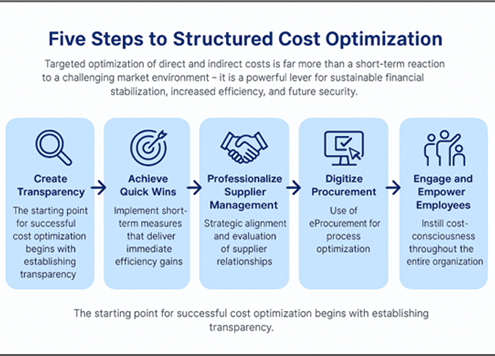
- Create Transparency
The first step toward successful cost optimization is establishing transparency. This starts with a comprehensive expenditure analysis that breaks down all costs systematically by category, business unit, and supplier. This data often reveals previously unknown weaknesses—such as redundant contracts, duplicate expenditures, or unused purchasing volumes. Only those who truly understand where their money is going can make sound decisions about targeted savings measures.
- Achieve Quick Wins
Based on this transparency, the second step involves achieving so-called „quick wins“— short-term actions that generate immediate efficiency gains. These include reviewing existing framework agreements for relevance, bundling purchases into larger volumes, or eliminating unnecessary services and subscriptions. These measures require little lead time but have a direct and immediate impact on financial results.
- Professionalized Supplier Management
The third step focuses on supplier management. This involves not only negotiating prices but also reevaluating the strategic direction of supplier relationships. Regular evaluation and classification of suppliers—based on criteria such as reliability, contribution to innovation, or service quality—provides the foundation for proactive relationship management. Establishing long-term partnerships with capable suppliers can reduce costs while also enhancing quality and innovation.
- Digitalize Procurement
In parallel, the fourth step is the digitalization of procurement processes. Implementing eProcurement systems enables automated ordering, digital approval workflows, and transparent invoice processing. These systems reduce process costs, prevent uncontrolled off-contract purchases (maverick buying), and ensure complete traceability. Especially for SMEs, such solutions offer significant potential with manageable implementation effort.
- Engage and Empower Employees
The fifth, often underestimated, factor is employee involvement. Cost awareness must not be limited to the procurement department—it should become a lived culture across the entire organization. Training programs, clear guidelines, and incentive systems for cost-saving ideas can help anchor this awareness in all areas of the company. Only when all employees pull together will an optimization program reach its full effectiveness.
The Right Support – Why Adconia Is the Ideal Partner
For SMEs with limited internal resources, external support from experienced consultants is essential to implement these steps in a structured, measurable, and sustainable way. This is where Adconia GmbH comes into an independent consulting firm specializing in hands-on cost optimization and efficient procurement processes for the midmarket sector.
ADCONIA – Beyond the Ordinary.
Consulting for procurement, supply chain and value chain with a focus on cost management, digitalization, organizational development, and sustainability.


